
A few small rocks on the road on the drive down the hill.

And a few more.

This was the Ierusalem Hou Church, but it's fallen down.
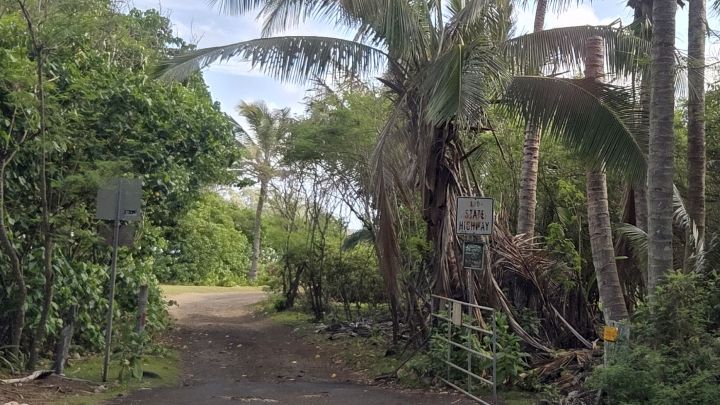
The road ends here: there's beach parking ahead.

But we parked a bit farther back, by these porta potties.

And this old building.

Bright flowers.

A little picnic area with bathrooms.

Coconuts.
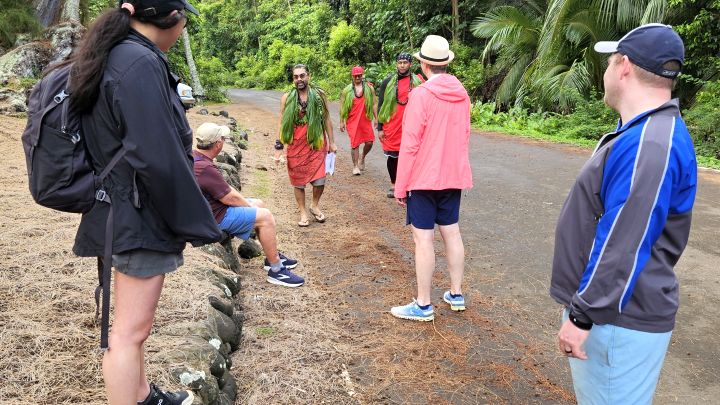
Gregory Kawaimaka Solatorio and two assistants came to meet us. The hike we're going on is on his private land.

He blew a conch to let the other locals know we were coming, although only a few people still live naturally in this valley.

A fresh mango.
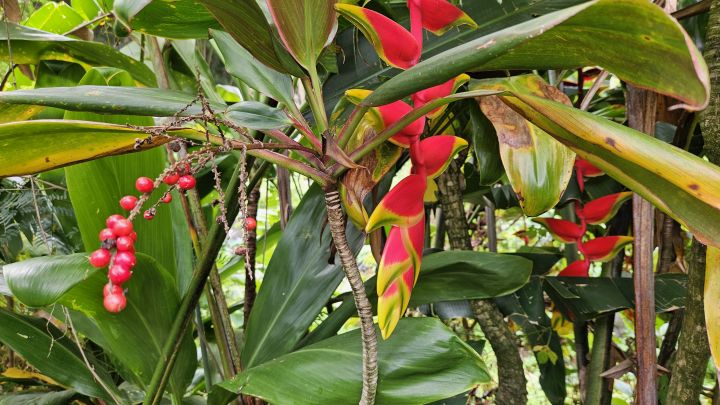
Bright red berries and flowers.
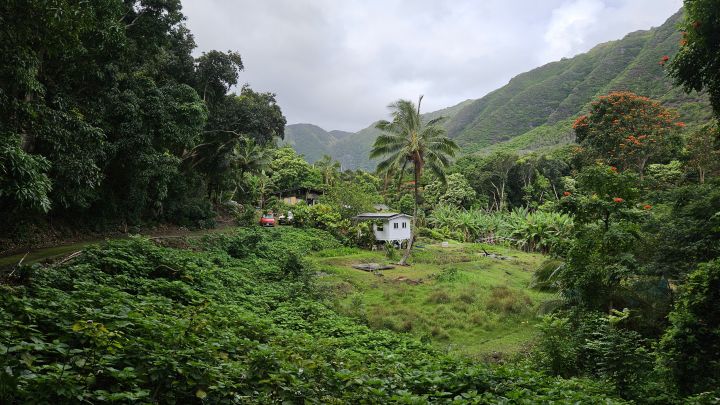
His home in the valley.

When you come to someone's home in Hawaii, you should always bring a gift of food because them spending time with you takes away from the time they would otherwise be gathering food. It should be food, not beer or wine, so children can eat it, too. Lele means to leap or jump and also altar, where you place gift.

Blowing a shell, pupu, is how you ask permission to enter someone's property. Since the native people live off the land, coming onto their land without permission is like going into someone's fridge without asking. Blowing a shell can also be used for important announcements to warm your people, although tourism has turned it into starting a party every night (which is like a boy crying wolf for the original purposes). Each shell has different sound, and you can blow them differently, like Morse code, so others know who you are and what you're saying.
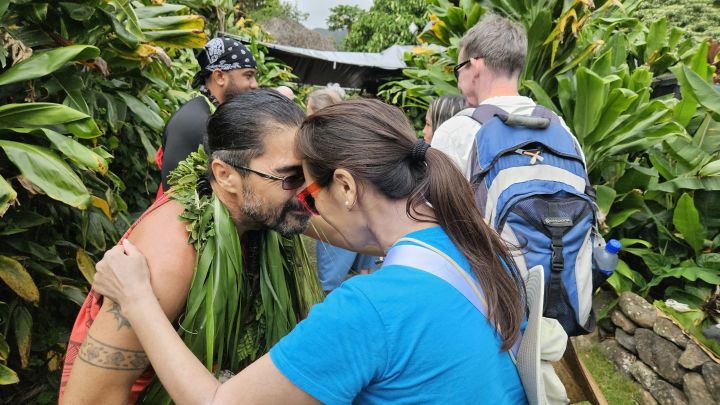
Traditional Hawaiian greeting of touching noses and inhaling simultaneously, sharing ha (breath).
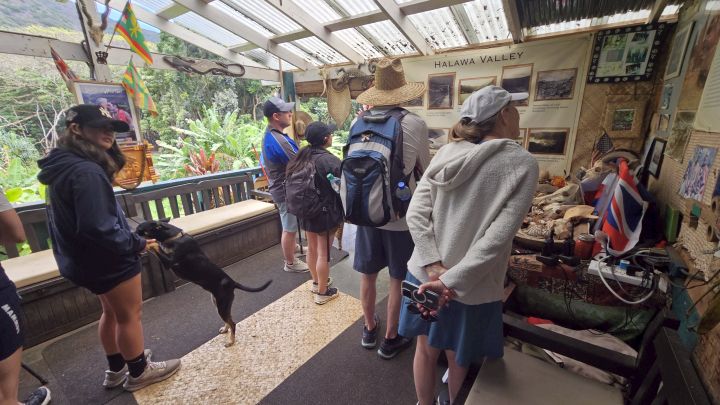
At his house, he has a little patio.

With many historical pictures of the valley.

A few close up.

More on the other wall.
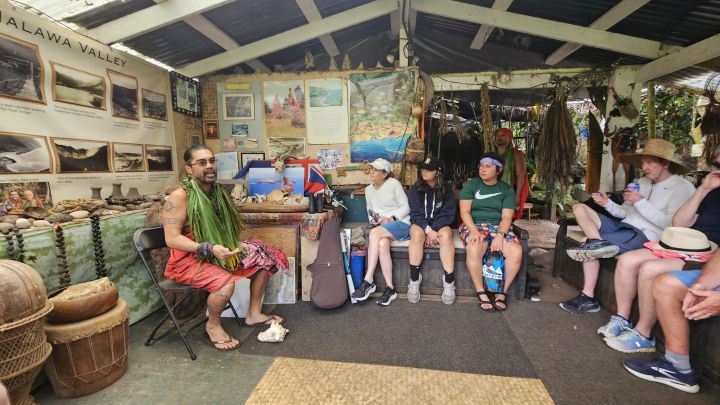
Gregory gave us a brief cultural and history lesson here, including:
Pa'ina is feast, luau is the taro leaf you eat, although tourism has changed luau to mean the feast itself.
There was no word for goodbye, only "until later," like "auf wiedersehen" in German.
The ancient Hawaiian village here is oldest known one in Hawaii. Kuliana is responsibility.
Taro leaf represents family, ohana. Molokai means twisting waters. Between Molokai and Oahu is a very deep, rough channel.
Halawa means breath or life. Ancient village here has 5000 people, 1000 farms.
20% of trees here are native, 80% are imported fruit trees.
He discussed four time periods: pre-King, King, territory, state. Ali'i was name for leader of a village. King Kamehaheha used guns and cannons from Europeans to take over other islands. He was very brutal, and destroyed entire villages (men, women, and children). Kings and queens come from European culture. Belgium, France, and Britain recognized Hawaii as a kingdom. Hawaii advanced very fast, as it was the center of Pacific. The king brought Thomas Edison here to get electricity, which Hawaii had before the White House. Whe Hawaii was overthrown by the US government in 1893, Hawaiian culture was made illegal (they could not have Hawaiian names, etc) except for tourism until a ban lifted by President Bill Clinton in 1993.
Hula was a sacred dance, how stories were told. His father is a hula master, and hula used to be danced only by men. Women dancing hula in skirts for military men, Elvis' Blue Hawaii.
They used to make cloth out of leaves, tapa.
They mostly ate dogs, changed to pigs for tourists.
If you don't cook real taro correctly, it scratches your throat and can cause your throat to swell up and can kill you. But if processed correctly, it's very healthy, and you can live off of just it. Gerber uses it for basis of many of their baby foods.
Venison is $45/pound in store, but he sells it for $5/pound. He also sells fruits very cheaply because there is no cost to him; the trees were here before him, and he uses an irrigation ditch instead of paying for water.
Native food consisted of a lot of raw fish, which they ate from head to tail. They would dive for octopus and flip its head inside out, which would paralyze it so it wouldn't bite but would still suction, and then suction it onto themselves to carry and keep diving for more.
He keeps dogs tied up around yard to keep deer away.
Makahiki were island-wide games which took 3 months. People would pack their food, homes, etc and walk there, have games, and then walk home.

A painting of the valley.

A film was made about his father, the last traditional elder of this valley.
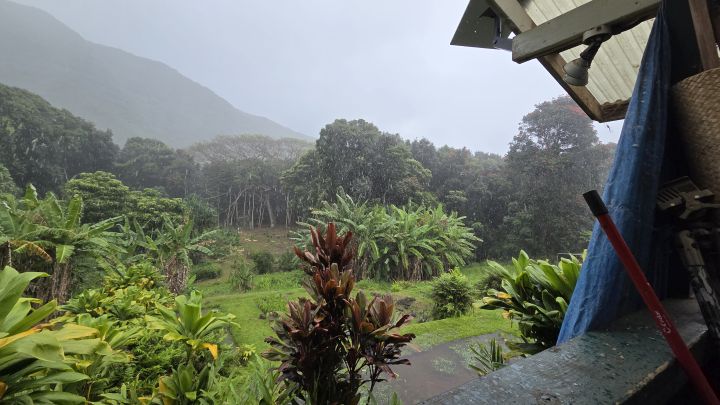
It started to rain. If it keeps up, we won't go on the hike, as we have to cross a few rivers, and it will be too dangerous. A few people on the hike today were planning on hiking yesterday, but it rained too much, so they didn't go.

In 1993, 100 years after the US overthrow of the Kingdom of Hawaii on Januardy 17, 1893, President Clinton and Congress officially apologized to the Hawaiians.

Molokai was known for 7 great spirits, or mo'oula, sometimes thought of as dragons. A rock by falls looks like a dragon head.

A 1946 tsunami completely destroyed the Halawa Valley. Only United Churst of Christ church, built in 1852, survived.

It also destroyed the swinging bridge.
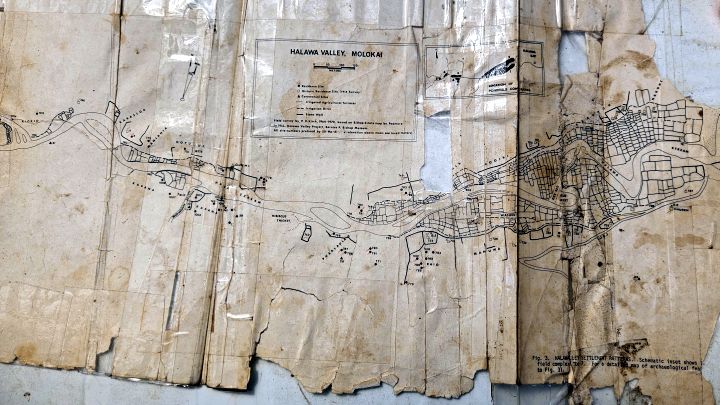
An old map of the valley.
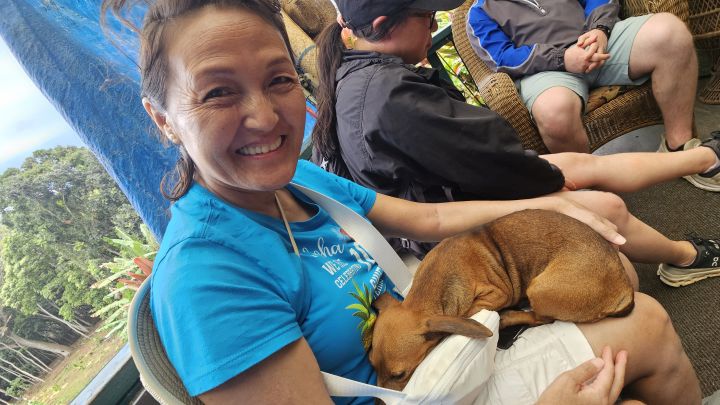
His dogs love the visitors.
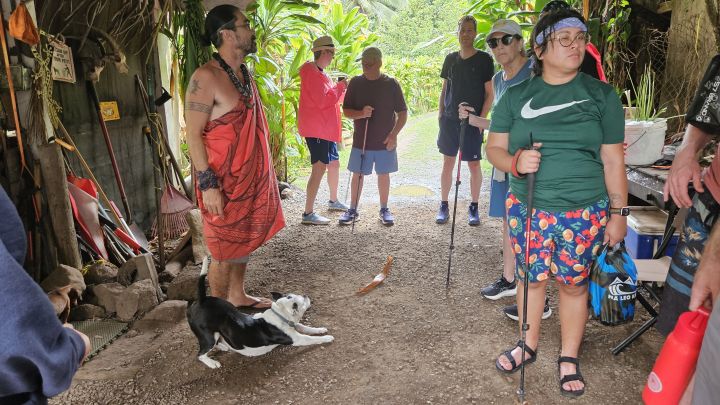
It stopped raining, so we can go.
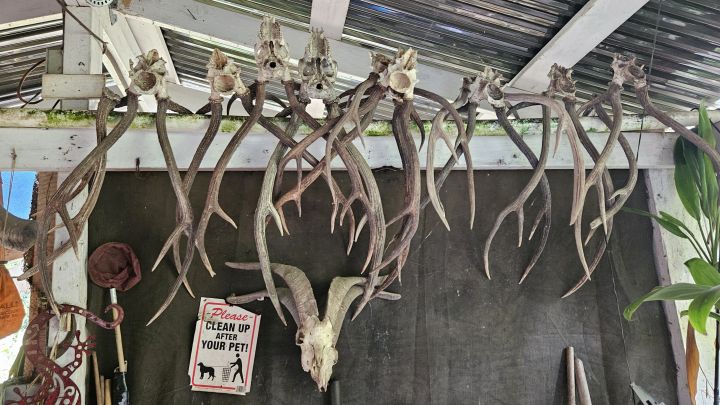
They hunt deer.

Practice.
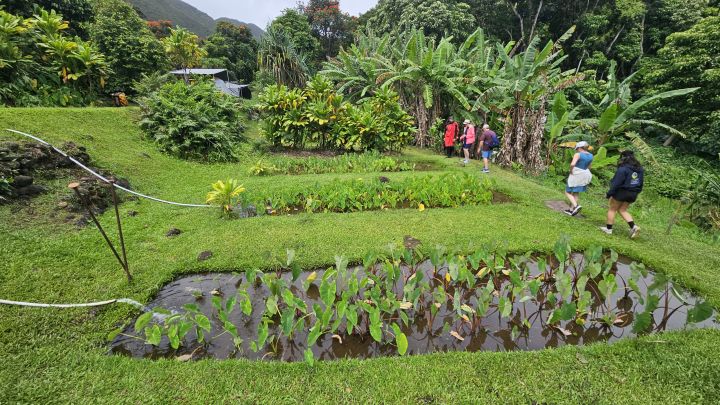
Taro patches.
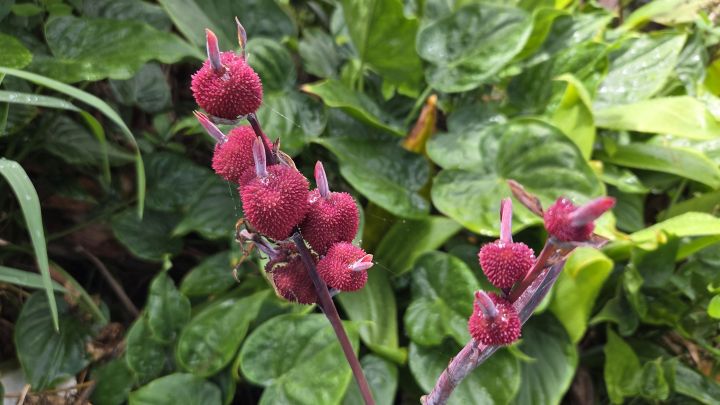
Bright flowers.

Yellow ones.
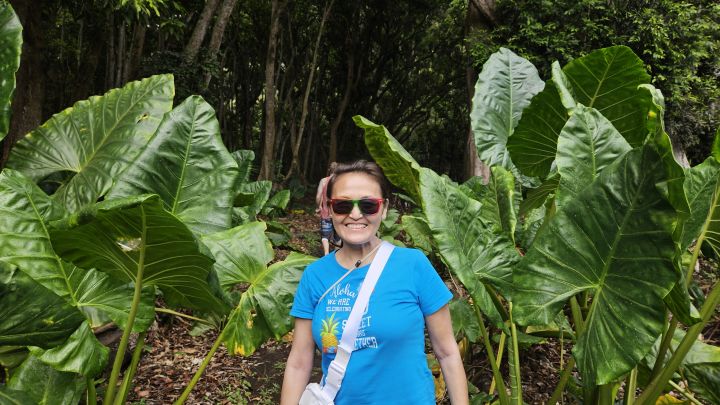
The elephant ear fern are as big as Ogii.

Into a forest.
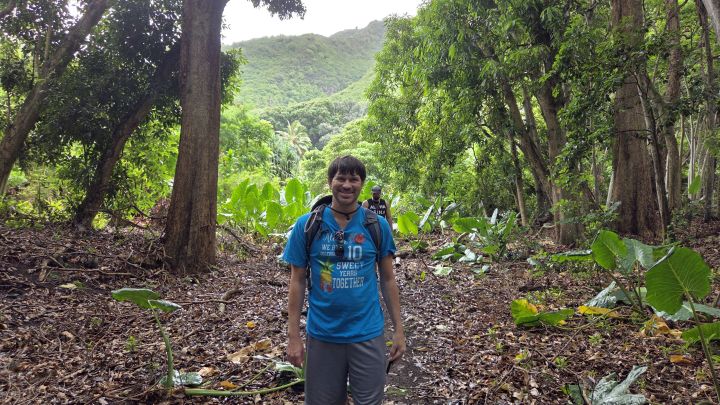
Me coming in.

First river crossing.

Gregory would lead, and his assistants would help everyone.
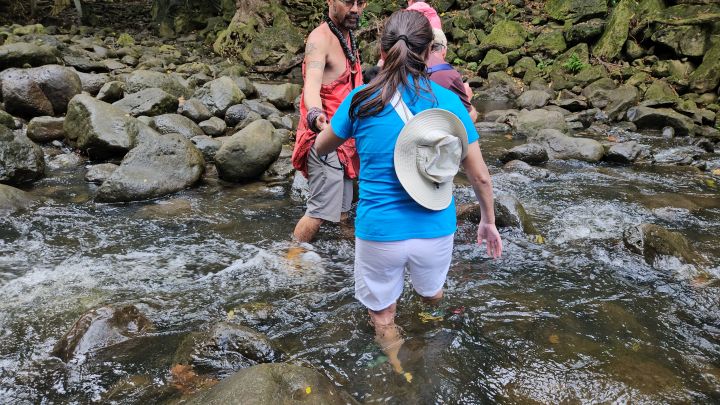
This one was about knee deep.

Me coming.

The rocks could be slippery.
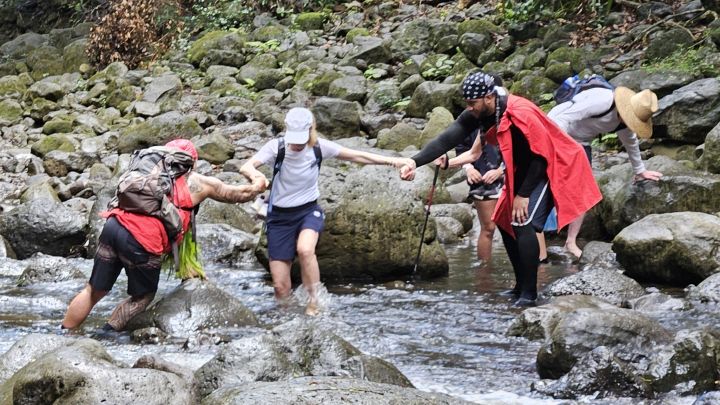
And the waters could be somewhat strong in some areas.

Everyone making it.
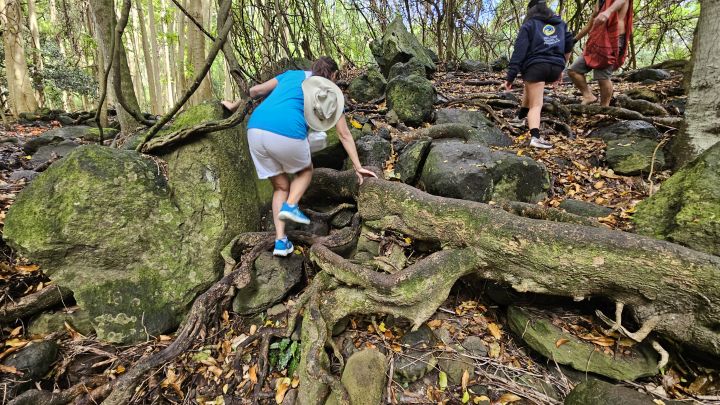
Climbing up the river bank.
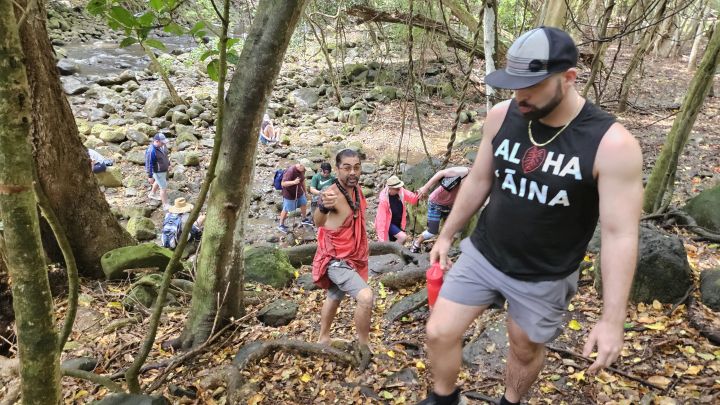
Here comes everyone.
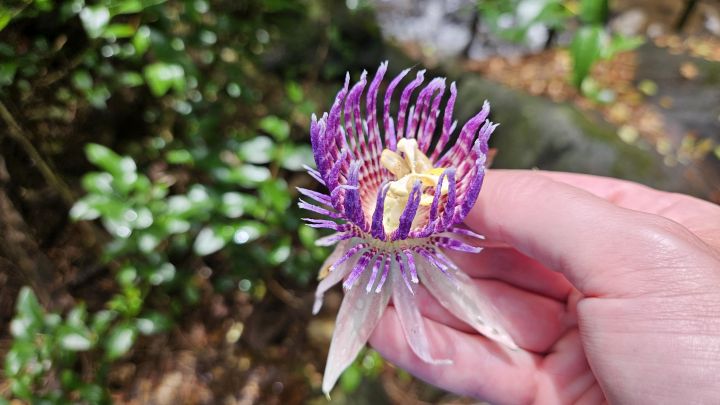
Passion fruit flower.
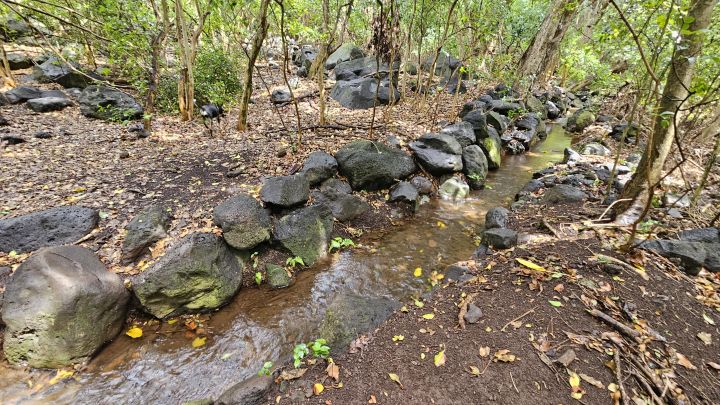
A small stream.
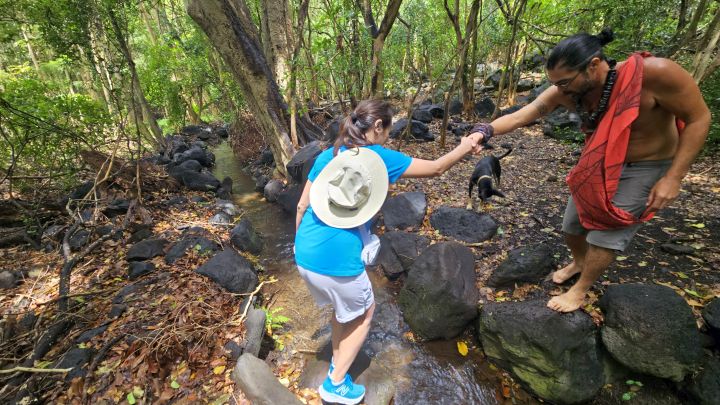
This one we didn't need to step into.
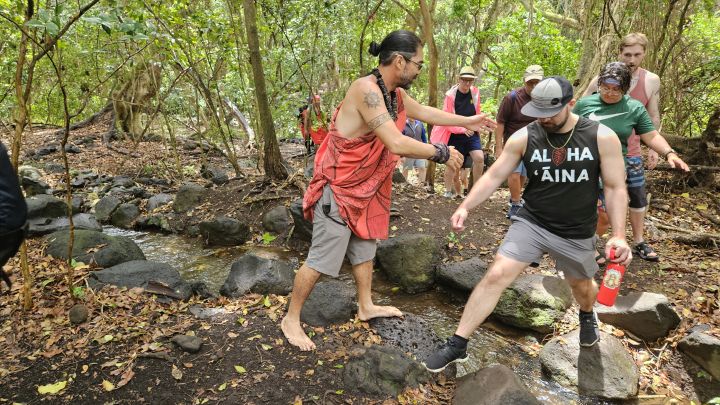
We could simply step across.

Suriname cherries grow here. You can eat them if they're still on the tree and dark (they're lighter in color before they ripen).
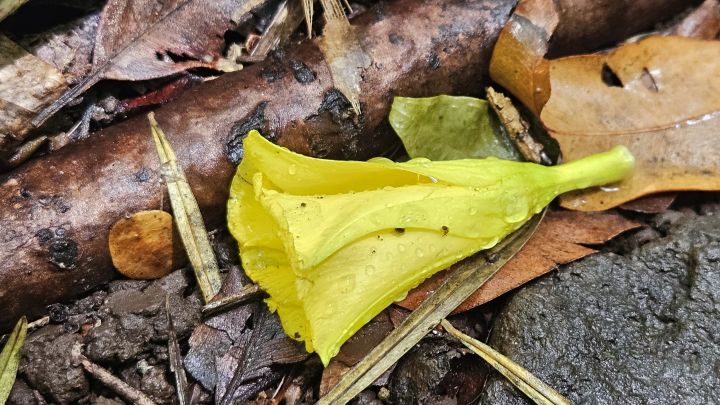
Oleander flower.

Lahala tree, or paintbrush tree. You can use the root fibers to make rope and leafs to weave mats.

Under some trees.

Flowers of the hau tree, which look like hibiscus. This tree is used to make stronger ropes. The flowers start off as yellow and get darker as the day goes on.
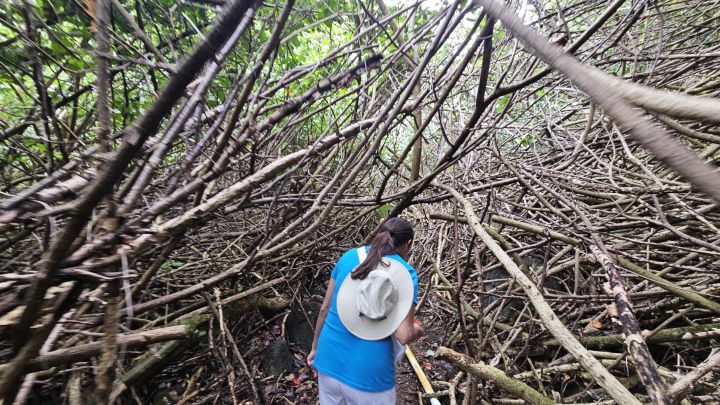
Many branches.
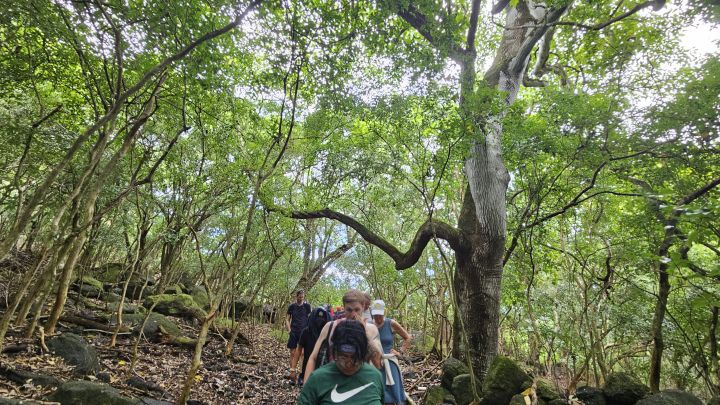
A kukui nut tree.
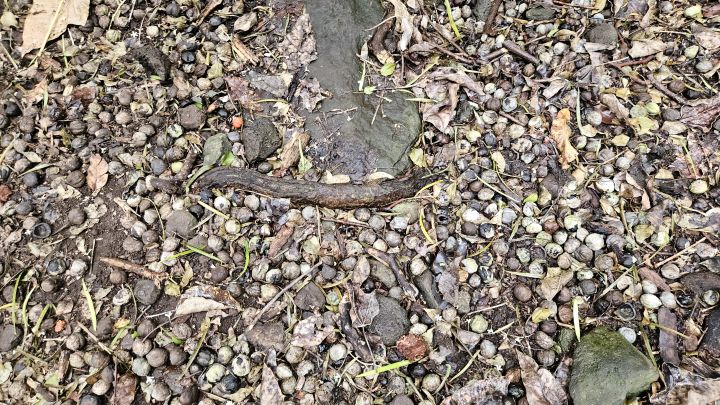
With many nuts below. If you eat more than a few nuts, they act as a laxative. You roast the nuts first to eat. They also use the oil for skin care.
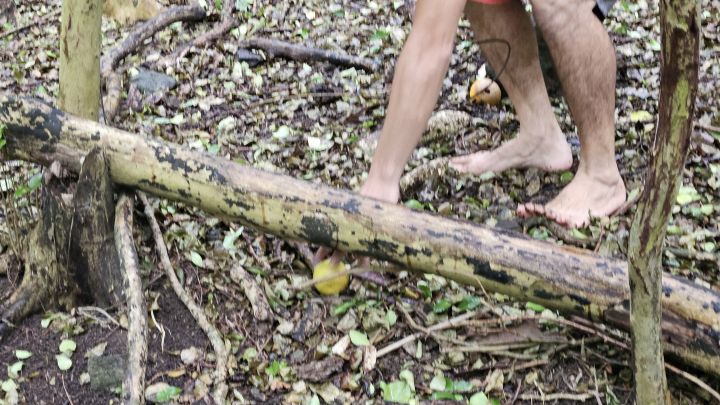
Fruit on the ground.

While you can eat it, it's safer to eat it off a tree.

Oranges and grapefruit.

Moss-covered rocks.

The path was mostly single-file.
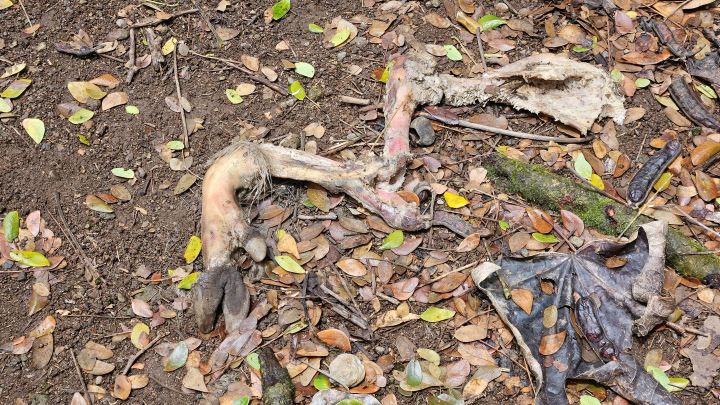
Pig leg.
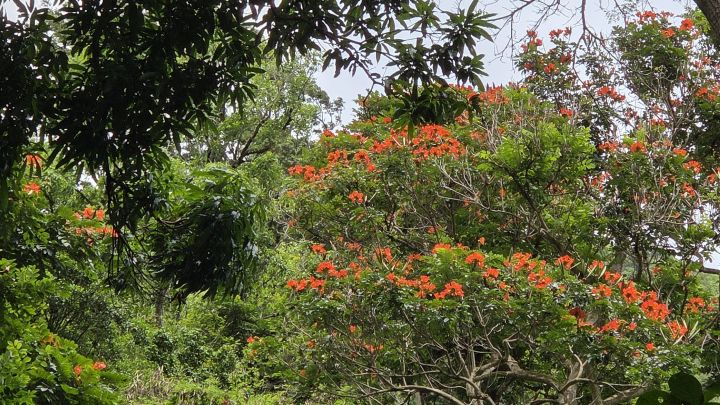
Bright flowers.
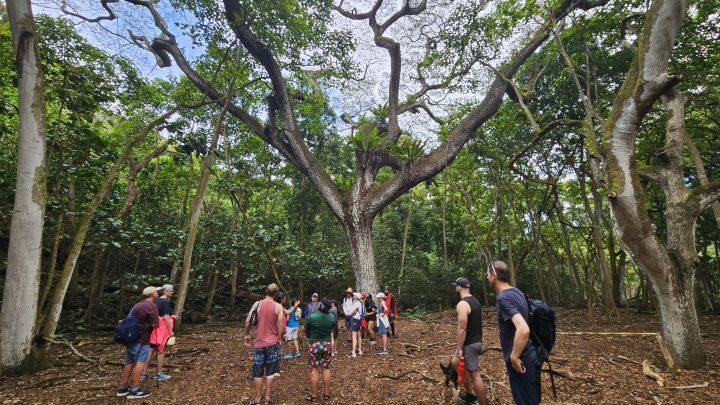
Stopping for a rest under a huge monkeypod tree, which they use to make tables and benches.

Mossy roots.
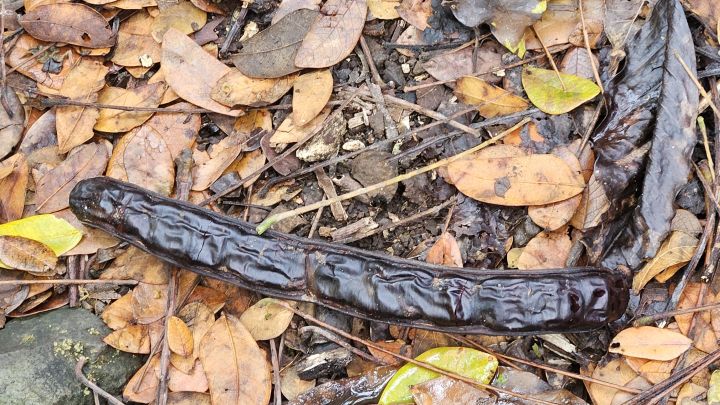
Monkeypod pods.
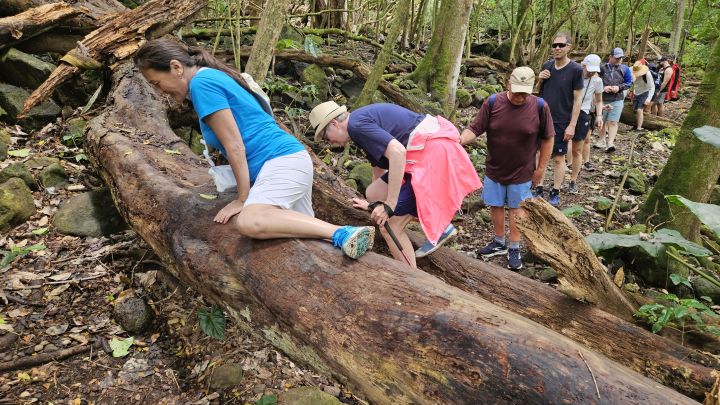
Over a fallen tree.
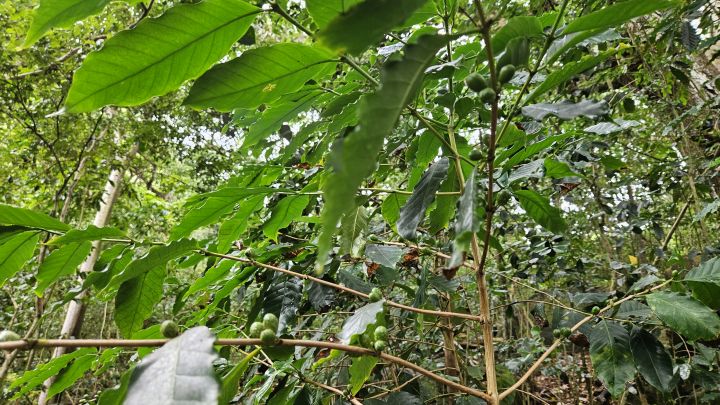
Coffee.
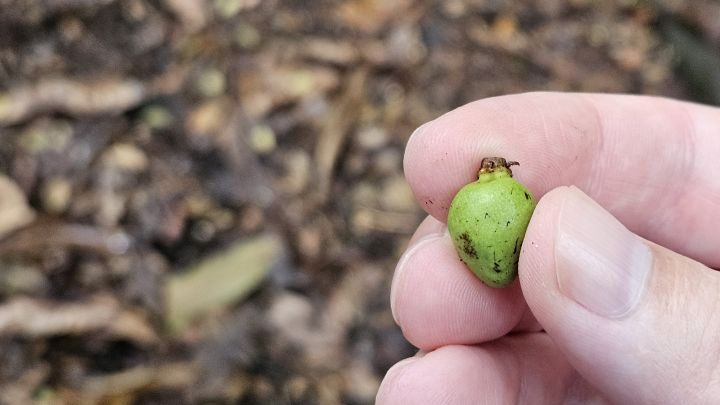
The bean.
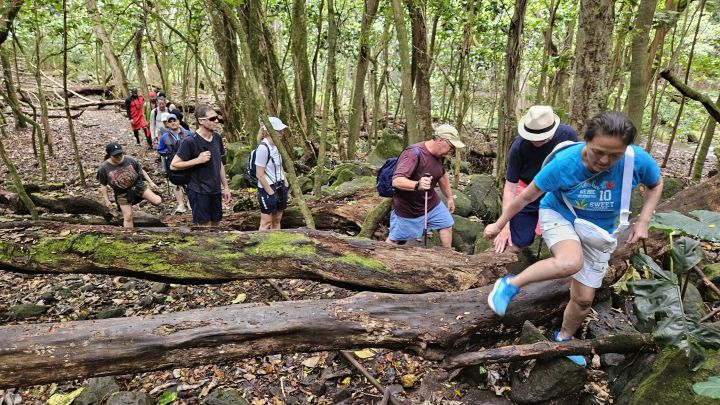
Over more trees.
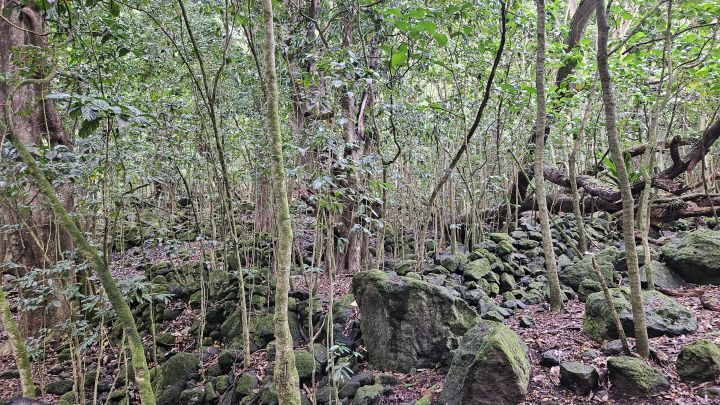
This old stone house foundation is from a native village, the oldest one in the state of Hawaii. The fire pit dates to 650 AD, and Polynesians didn't come until 1200 AD, so they don't know who created it.
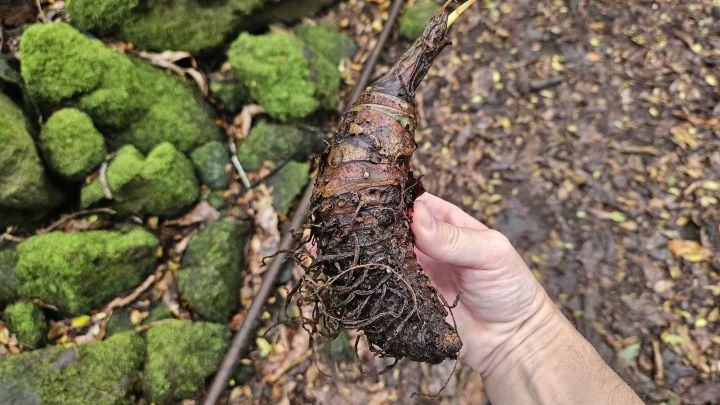
Root of the elephant ear fern. They only ate this as a last resort.
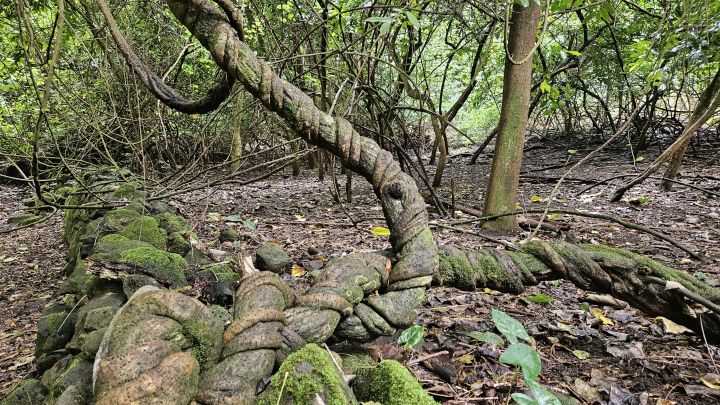
A large vine twisting around a tree.

More old rock walls.
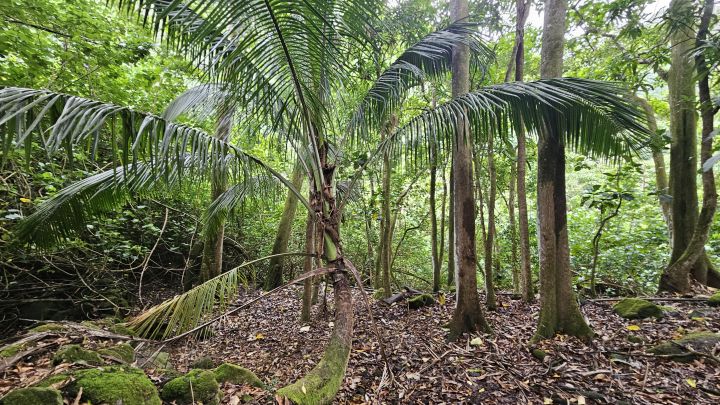
Large fern.
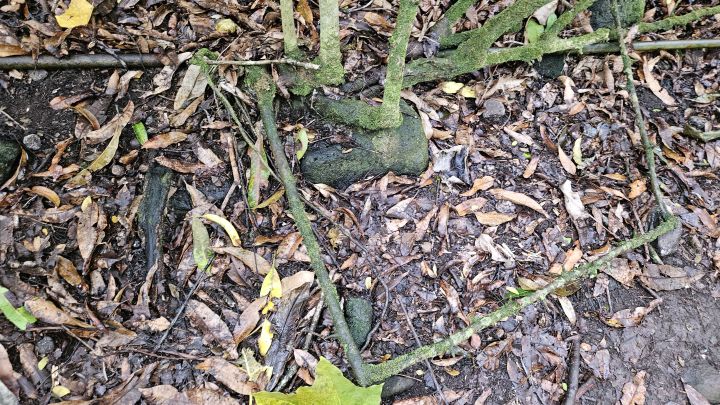
This plant grew with two 90-degree angles.
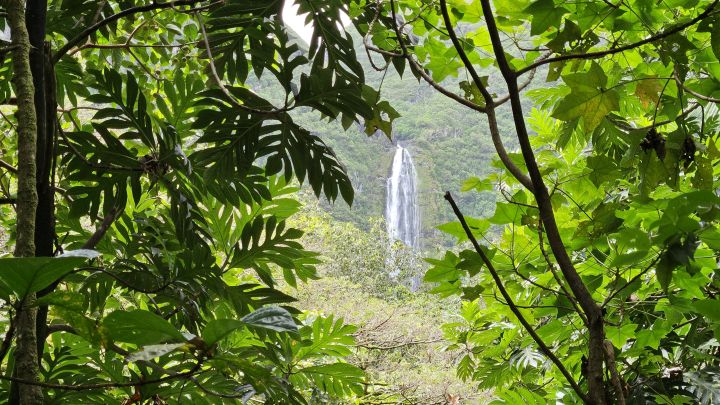
A waterfall across the river.
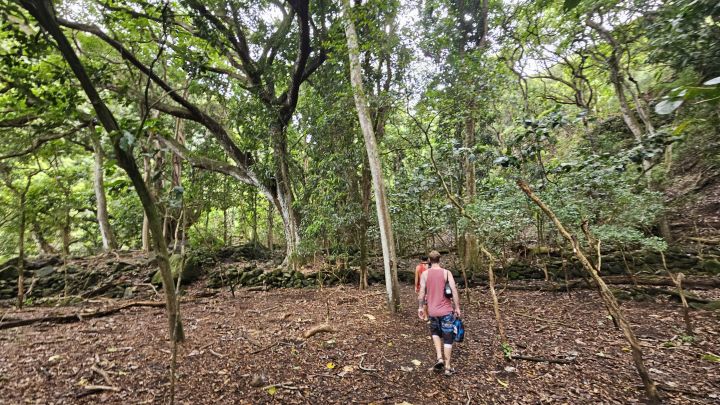
A coconut grove.
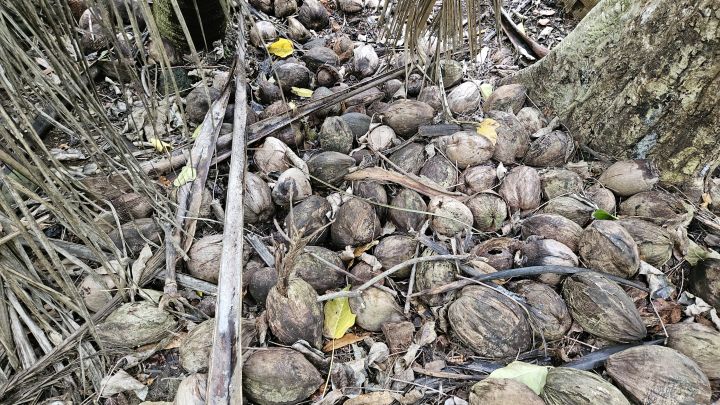
Many coconuts below.
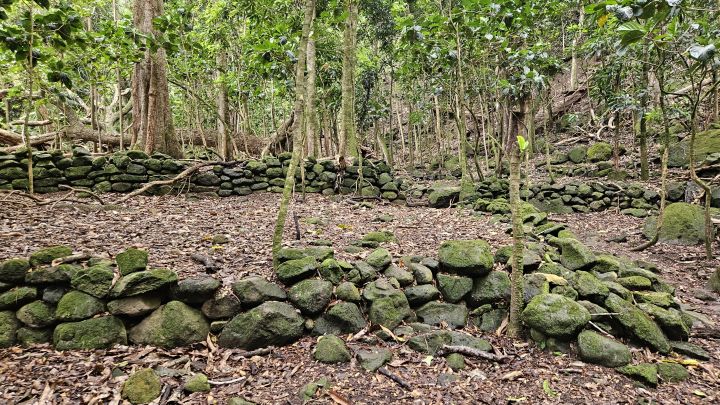
More stone walls.
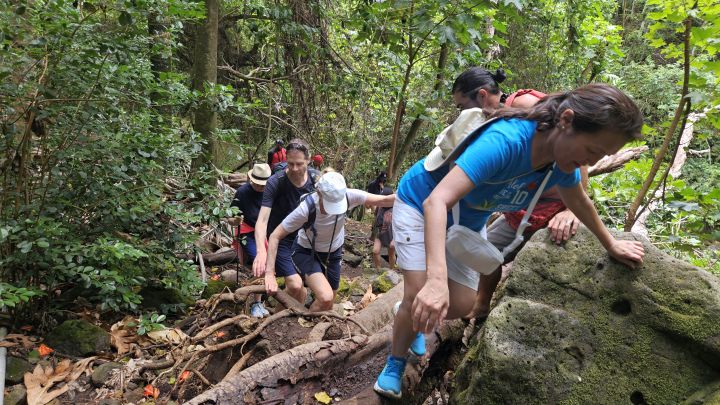
A little upwards hike.

Nuni fruit.
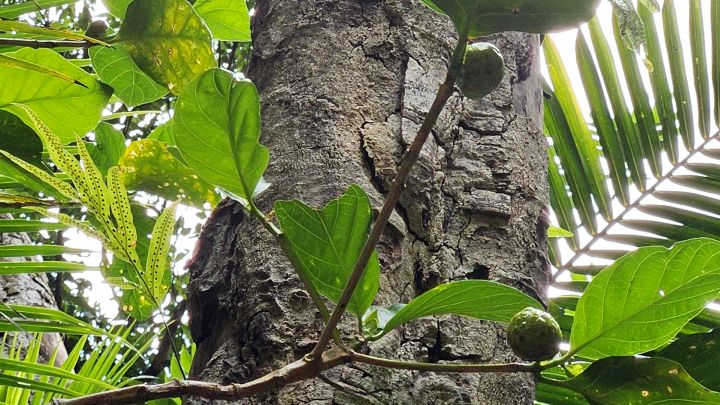
Avocado.
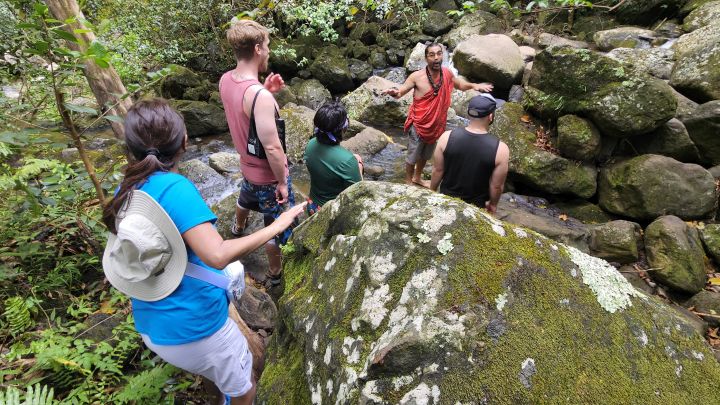
Another river to cross.
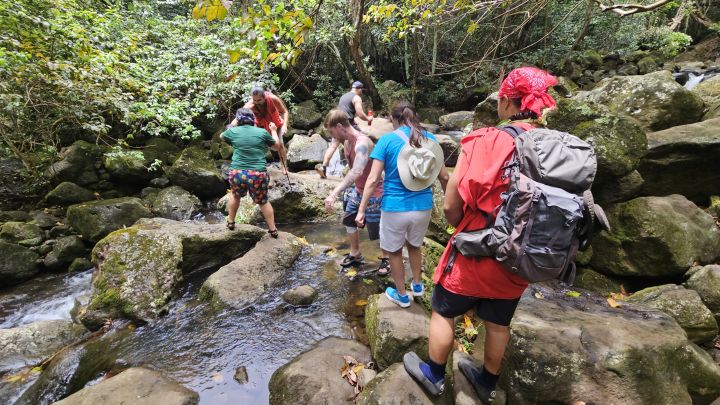
This one we could stay on the rocks.
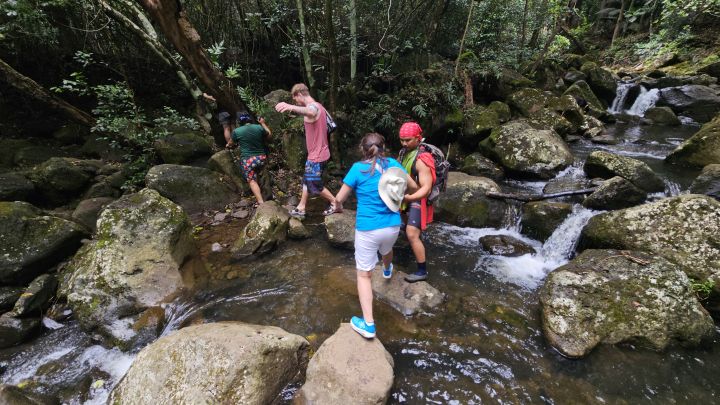
Which weren't too far apart.
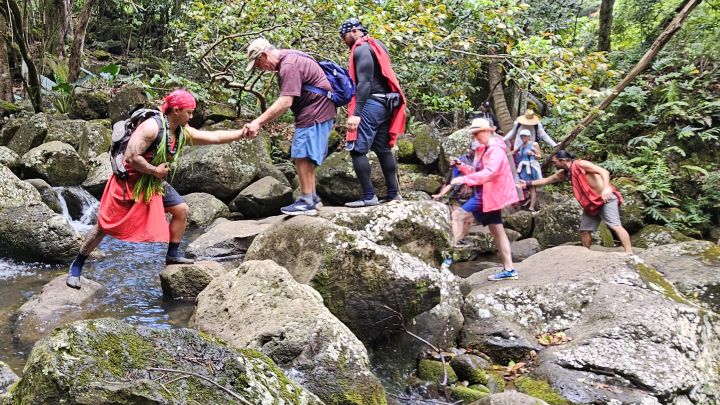
Giving people a hand.

Through some rocks.
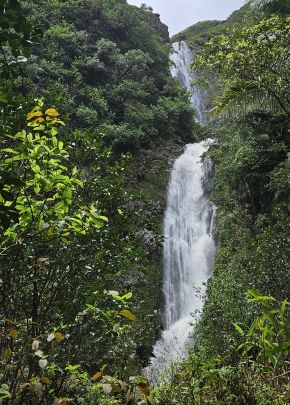
Moaula Falls.

Us.

Some people swam in the pool.
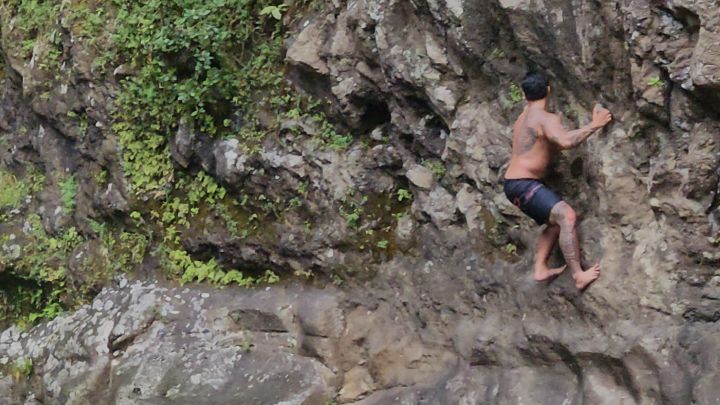
Or even climbed along the edges.
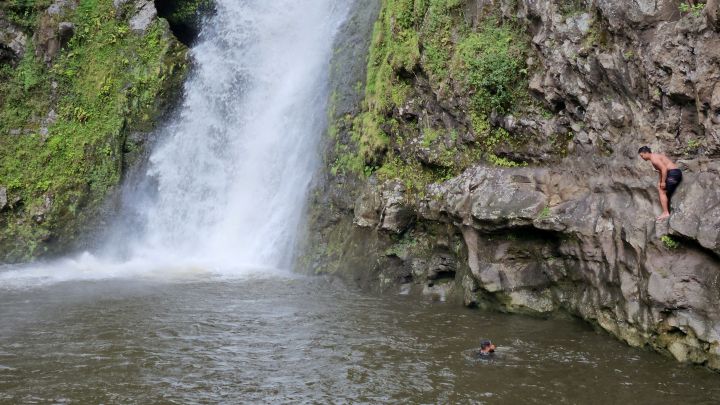
To jump.

We just watched.
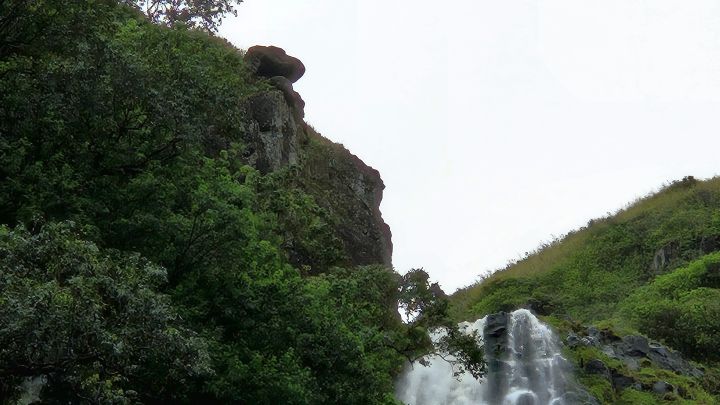
The rock that looks like a dragon head.
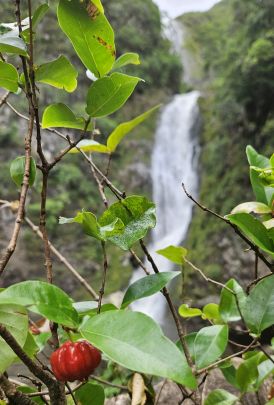
A cherry with the falls.

With Gregory.

Time to head back.
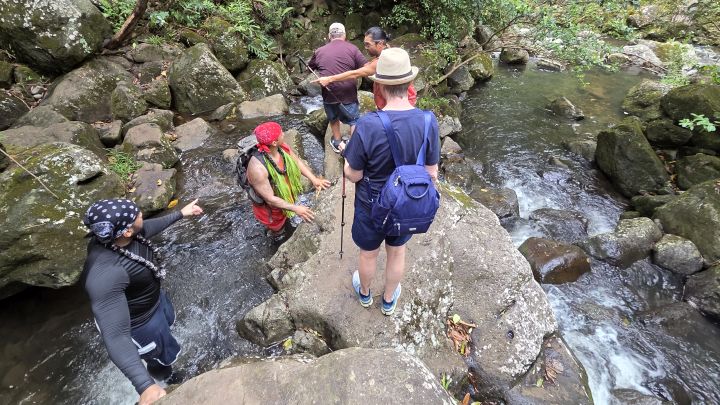
Onto the rocks.

To cross the river.

Under the trees.
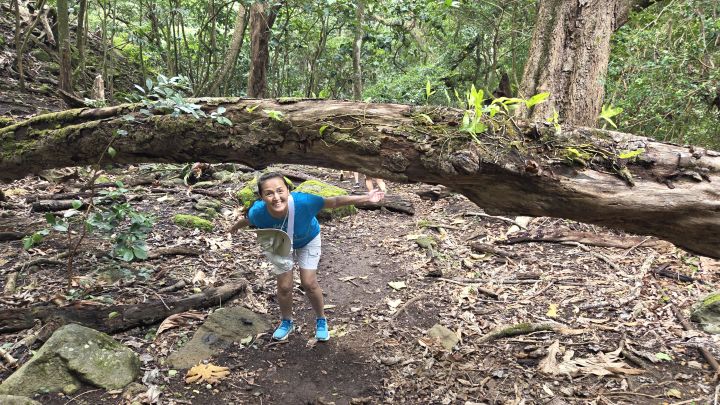
And another one.
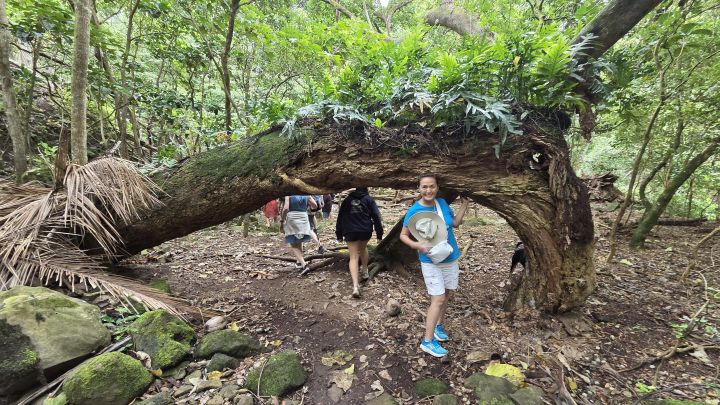
And another.
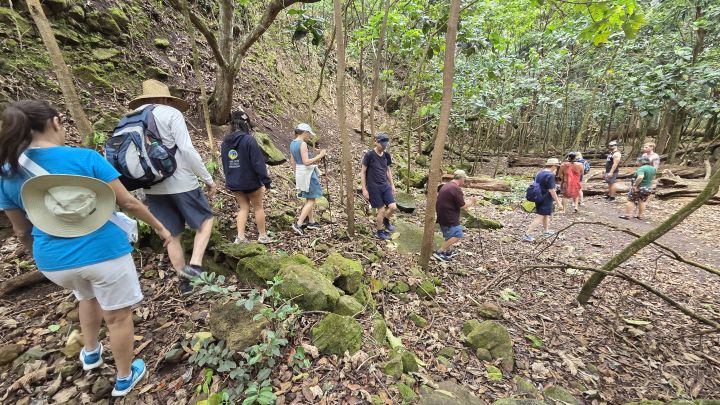
The trail is pretty easy to follow.
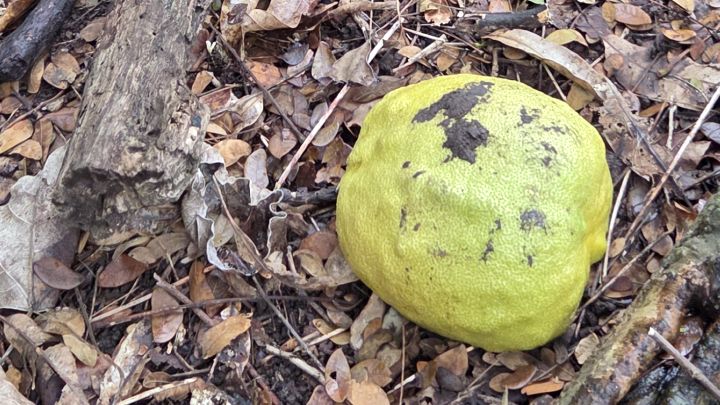
More fruit.
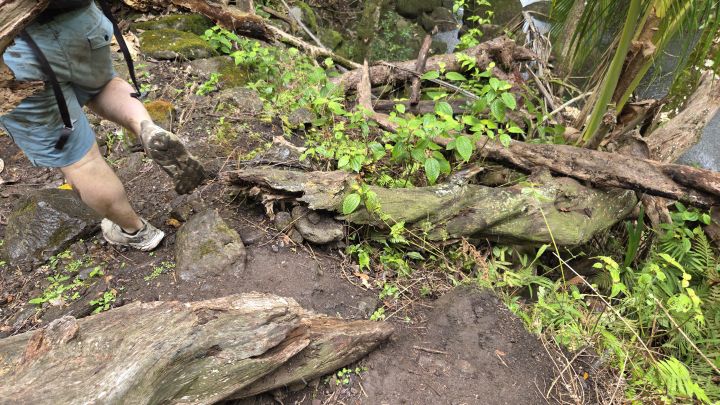
Someone fell a few feet off the trail after slipping on the mud here. Thankfully he wasn't hurt.
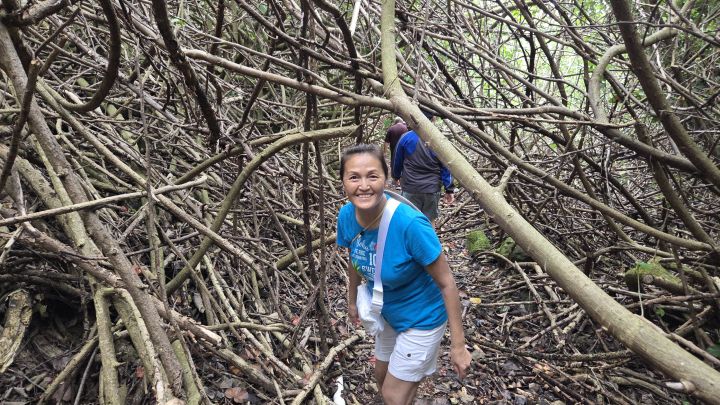
Back through branches.
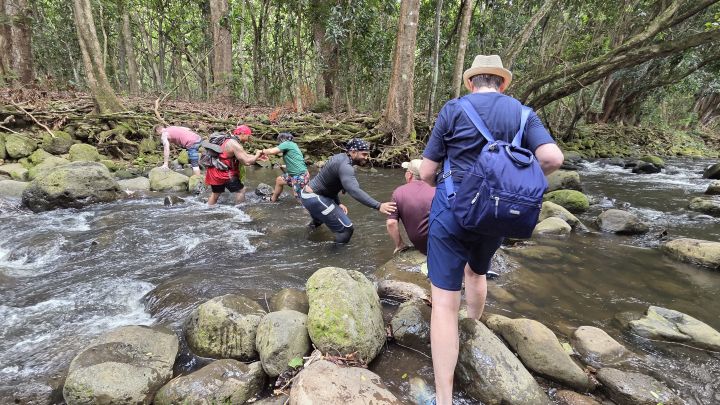
And across the last river.
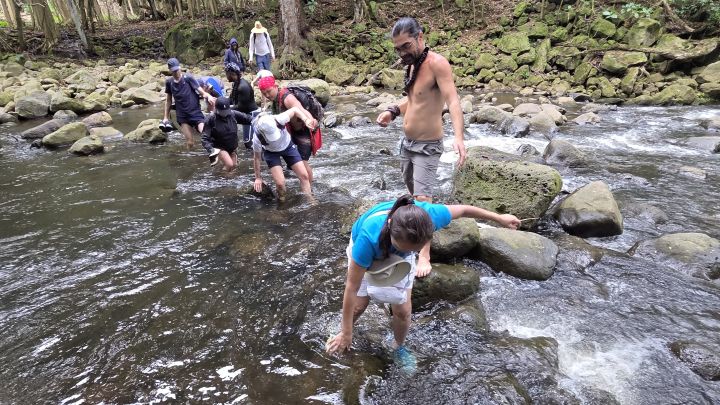
Which was the deepest one.
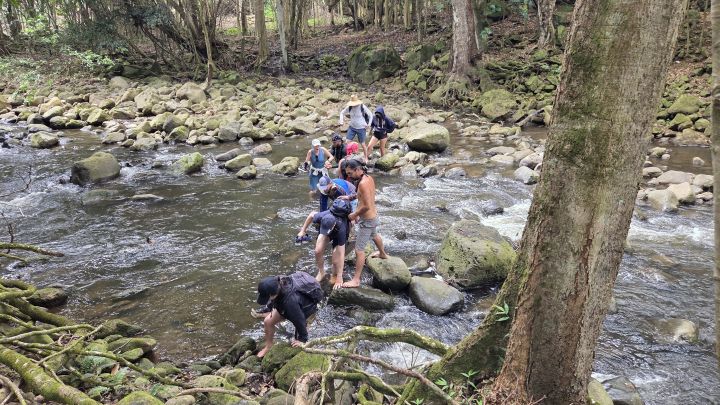
Everyone getting across safely.
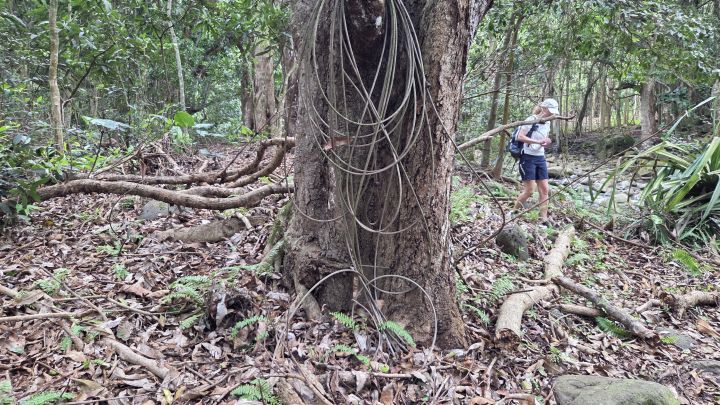
This tree had a cable around it.
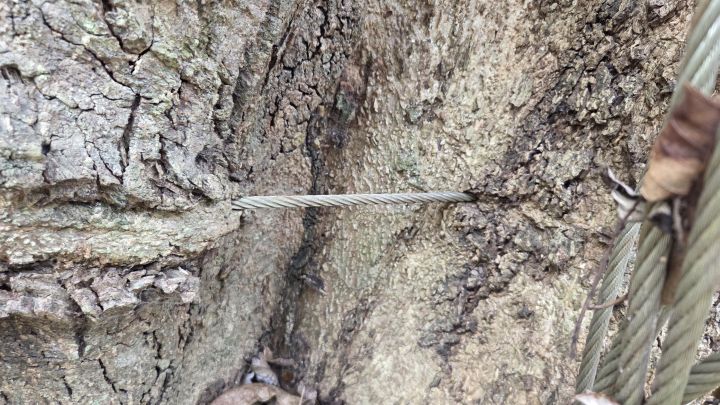
Which the tree had grown over.
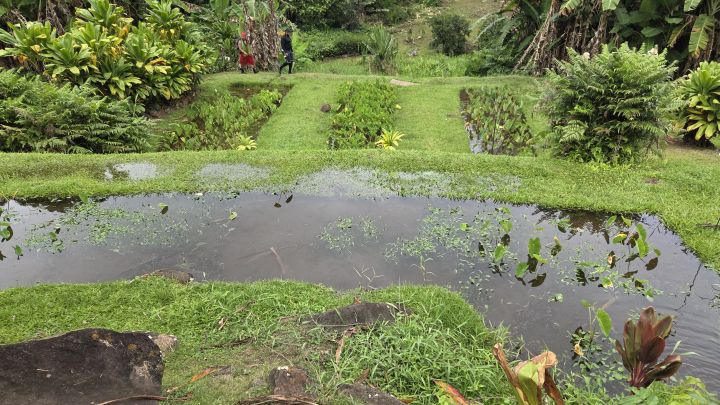
Back to his home.
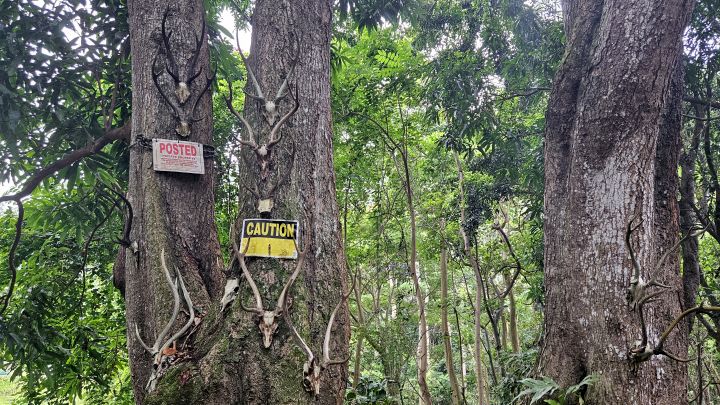
More deer skulls.

Bright fruit.
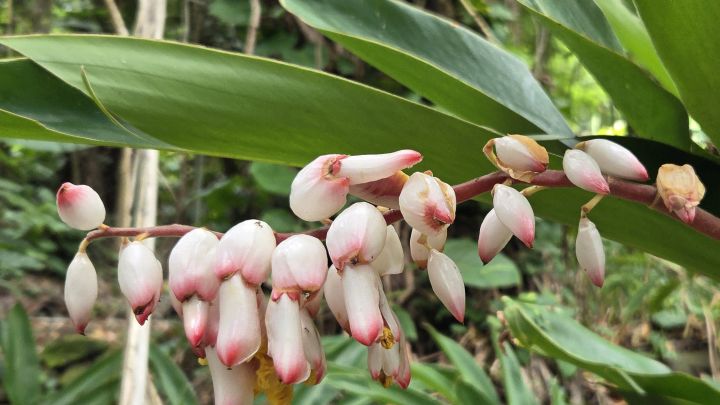
Flowers.
A video of a bit of the hike.